The Applied Intelligence Blog
The Benefits of AI for Households, Workers and Businesses
The benefits of AI for American households, workers, entrepreneurs and businesses, and the barriers to cross before those benefits arrive.
The benefits of AI are easy to state and harder to reach. Better decisions, less busywork, faster plans and more room to grow are all within reach for American households, workers, entrepreneurs and businesses. But those benefits do not arrive when you download an app. They arrive when AI is put to work inside your actual week and stays there.
This post looks at what AI can do for each group, why the opportunity is so large for the country, and what it takes to turn a possibility into a habit.
An honest starting point
Online, it can seem that everyone already enjoys these benefits. Social feeds are full of people showing off what AI did for them. That is an echo chamber of early adopters. On the ground, most people have heard of AI, some have tried it, and far fewer use it every week for real work.
That is not because the benefits are fake. It is because there are five barriers between AI and real results: Intent ("why do I need it?"), Use ("what would I use it for?"), Ecosystem ("are people like me using it?"), Capability ("how do I use it, and who do I call?") and Consistency ("will it still be useful next week?"). Every benefit below depends on crossing them. We explain each one in how to start using AI.
Keep that in mind as you read. These are not promises. They are what becomes possible once the barriers are crossed.
Benefits for households
For a household, AI is less about technology and more about having a patient helper for the questions life throws at you.
- Clearer decisions. Comparing options for a big purchase, a move, a repair or a school choice, with the trade-offs laid out plainly.
- Less paperwork stress. Making sense of a confusing letter, a contract or a set of forms before you sign anything.
- Plans you can stick to. A household budget, a meal plan or a schedule for the family, drafted in minutes and adjusted as life changes.
- Learning on your own terms. Picking up a new skill, a language or a hobby at your own pace, with explanations that meet you where you are.
The crossing for a household starts with one real question in your life. Not "what can AI do?" but "what do I want to sort out this month?" Our guide to AI for everyday life walks through one family's list, from a shift calendar to open enrollment.
Benefits for workers
For people at work, whether in the field or at a desk, the benefit is getting through the job in front of you with more confidence and less grind.
- Faster, checked calculations. A materials estimate, a load figure or a schedule worked out with the assumptions shown, so you can trust it or correct it.
- Less time on write-ups. Turning field notes into a clean report or a daily brief.
- Fewer surprises. Spotting a risk in a plan before it becomes a problem on site.
- A stronger career. The people who learn to apply AI to their own work will lead. That skill makes a worker more valuable, not less.
That last point matters. The goal is not to replace skilled people. It is to give them better tools and room to do the parts of the job that need their judgment. Small, clear tools like the ones in Forge are built for exactly that: Forge - Crew for field and trade work, Forge - Labs for engineers, analysts and other desk roles.

Benefits for entrepreneurs
Entrepreneurs are usually short on one thing above all: time. AI can act like an extra pair of hands on the work that keeps a young company moving.
- Sharper plans. Testing a business idea, an offer or a market before committing money to it.
- More done with a small team. Drafting proposals, answering routine questions and keeping records in order.
- Better use of scarce attention. Seeing at a glance which customers, deals or tasks need you today.
The barrier entrepreneurs hit most often is Capability: too many tools and no time to work out which ones matter. The crossing is curation. Pick the few tools that fit, set them up once, learn them on your own tasks, and drop the rest. AI for entrepreneurs shows what that looks like for a new electrical contractor.
Benefits for businesses
For established businesses, especially in traditional industries like construction, manufacturing, logistics and field services, the benefits of AI come from better decisions made more often.
- One picture of the business. Leaders see the work, the evidence and the decisions in one place instead of across scattered spreadsheets and inboxes.
- Earlier warning on risks to the plan. Problems with a site, a supplier or a schedule show up before they become expensive.
- Clearer options to grow. Which jobs to bid on, which customers to call and where to invest next.
- Knowledge that stays. What experienced people know gets captured in the system instead of walking out the door.
None of this comes from a chatbot added to an old process. It comes from designing the system around AI, with the people who do the work, and following up until it is used every week. That is what we built Watch Tower to do: Applied Intelligence for your Business, starting with traditional industries.
Why this is a national opportunity
Every big technology wave has needed people whose job was to apply it for everyone else. When the web and mobile apps arrived, services companies that set up and ran web and mobile systems for other businesses made those benefits reach ordinary companies. AI needs the same kind of AI adoption layer.
Software companies already know what AI is for. The bigger opportunity for the United States sits in the households, trades, small businesses, plants and careers that have not yet been shown how. When a contractor bids smarter, a plant office plans better, a worker builds a skill that raises their pay, and a family makes a clearer decision, the gains add up across the whole economy. That is the ambition behind Applied Intelligence: AI put to work inside a system, with a team behind it, until it pays off every day.
Making the benefits real
The pattern is the same whoever you are:
- Start from one goal, decision or task in your own words.
- Name one specific use for AI on that goal.
- Find people like you who use it, or build it with the people who do the work.
- Choose a few tools, set them up and learn them on real tasks.
- Put AI into the routine you already return to, and check back in a few weeks.
Do that, and the benefits stop being a headline and start being part of your week.
Your next step
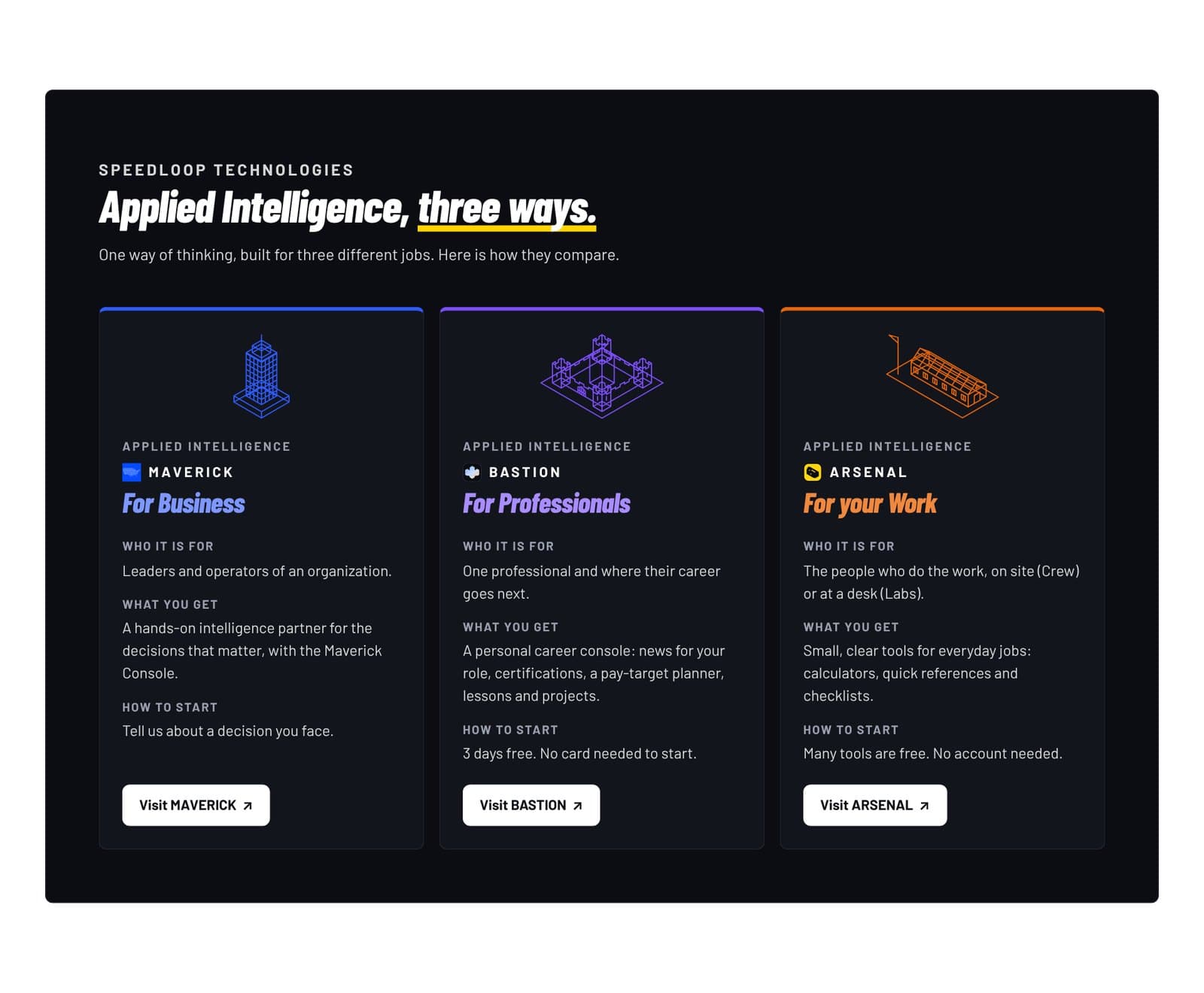
Pick the group above that fits you and the one benefit you want most. Then read What Is Applied Intelligence? for the full idea, or go straight to the product built for you: Watch Tower for your business, Forge for your work, or Beacon for your career.
Frequently asked questions
Is AI worth it for a small business?
AI is worth it for a small business when it is put to work on decisions the business makes often, inside a system designed around them. The benefits are one picture of the business, earlier warning on risks, clearer options to grow and knowledge that stays. A chatbot added to an old process rarely delivers them.
What are the benefits of AI in everyday life?
The benefits of AI in everyday life are clearer decisions, less paperwork stress, plans you can stick to and learning at your own pace. A household might compare options for a repair or a move, make sense of a confusing letter before signing, or draft a family budget and adjust it as life changes.
How does AI help workers?
AI helps workers get through the job with more confidence and less grind. It gives faster calculations with the assumptions shown, cuts time spent on write-ups, and spots risks in a plan before they reach the site. The goal is not to replace skilled people but to leave more room for the parts that need judgment.
Why don't more people get the benefits of AI yet?
Most people don't get the benefits of AI yet because five barriers stand between AI and real results: Intent, Use, Ecosystem, Capability and Consistency. The benefits are real, but they arrive only when AI is put to work inside someone's actual week and stays there, not when an app is downloaded.


